
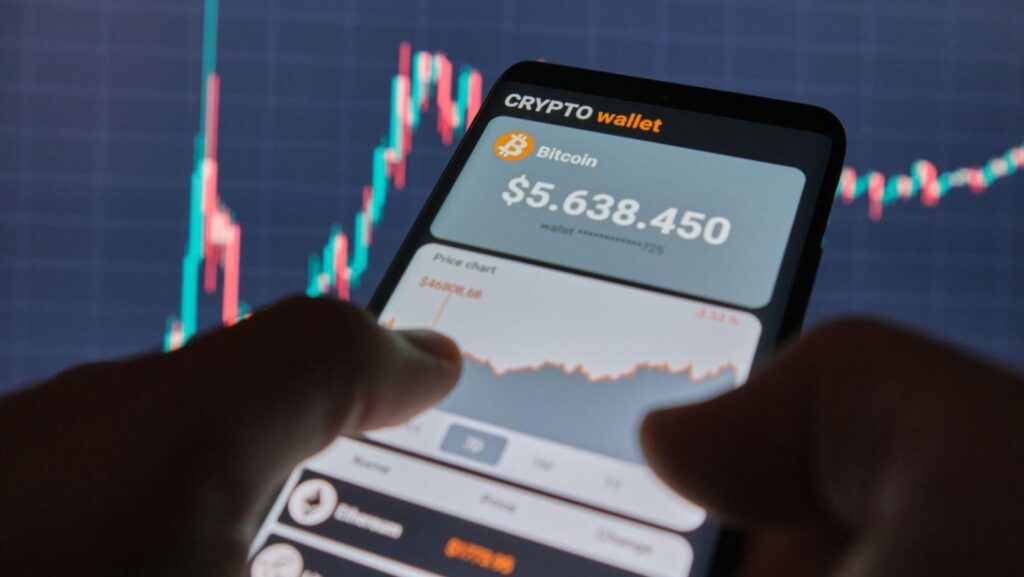
Cryptoprocessing is the infrastructure that lets a business accept cryptocurrency payments, verify blockchain transactions, manage risk, and settle funds in crypto, fiat, or stablecoins. It sounds simple until the first customer sends USDT on the wrong network, at which point “payment innovation” becomes a support ticket with a wallet address.
For merchants, the point is not to become a crypto exchange. The point is to accept digital assets without manually checking block explorers, chasing confirmations, pricing invoices in volatile coins, or explaining to accounting why a payment arrived in four fragments.
That is why modern crypto payment systems sit between the customer, the blockchain, the merchant, and sometimes the banking system. Good infrastructure hides the mess without pretending the mess does not exist.
What is Cryptoprocessing?
Cryptoprocessing is the process of accepting, verifying, and settling cryptocurrency payments for goods, services, subscriptions, or digital platforms.
In plain terms: the customer pays from a crypto wallet, the processor detects the transaction on-chain, confirms that the right asset and amount were sent, and then notifies the merchant that the payment can be accepted. Depending on the setup, the merchant may keep the asset, convert it to fiat, or settle in a stablecoin.
The basic flow usually looks like this:
- The merchant creates an invoice or payment request.
- The customer chooses a coin, token, or network.
- A payment address or QR code is generated.
- The customer sends the transaction.
- The processor monitors the blockchain.
- The payment receives the required confirmations.
- The merchant receives a status update.
- Settlement happens in crypto, fiat, or stablecoins.
The technical core is not glamorous. It is mostly address generation, transaction monitoring, exchange-rate handling, reconciliation, and risk controls. This is finance’s version of plumbing: nobody praises it when it works, but everyone notices when it leaks.
Why does Cryptoprocessing matter for merchants?
Cryptoprocessing matters because crypto payments create operational problems that normal card payments do not have.
A card payment has authorization, chargeback rules, fraud scoring, and familiar settlement flows. A crypto payment has network selection, wallet signatures, blockchain confirmations, irreversible transfers, volatile exchange rates, and compliance screening. These are not cosmetic differences. They change how a business handles checkout, refunds, reconciliation, and risk.
For businesses that want to accept digital assets without building the entire stack in-house, Cryptoprocessing becomes part of the payment infrastructure rather than a side experiment. It connects the crypto side of the transaction with the operational realities merchants already understand: invoices, balances, settlements, reports, and compliance checks.
The biggest merchant use cases are usually:
- cross-border payments;
- digital services;
- high-ticket online purchases;
- SaaS subscriptions;
- gaming and iGaming platforms;
- marketplaces;
- B2B settlement;
- crypto-native products.
Crypto is not automatically better for every checkout. A five-dollar retail payment in a crowded network can be a strange place to discover the meaning of transaction fees. But in high-friction corridors, international settlement, or crypto-native commerce, the logic becomes easier to defend.
How does a crypto payment move from wallet to merchant?
A crypto payment starts when the customer signs a transaction with their wallet and broadcasts it to a blockchain network.
The payment is not “sent” in the same way a bank transfer is sent. The wallet creates a signed instruction, the network validates it, and miners or validators include it in a block. Once the transaction is confirmed, the merchant can treat it as received according to the risk rules set for that asset and network.
The number of confirmations matters. A low-value stablecoin payment on a fast network may require fewer confirmations than a large Bitcoin payment. A processor needs to balance speed against finality risk. Accept too early, and the merchant may face reorganization or double-spend risk. Wait too long, and the checkout feels like watching paint dry on a distributed ledger.
The processor also has to match the transaction to the invoice. That means checking:
- the asset;
- the network;
- the destination address;
- the expected amount;
- the transaction hash;
- confirmation status;
- timeout rules;
- underpayment or overpayment;
- refund path if something goes wrong.
This is where crypto payment infrastructure becomes less about ideology and more about boring, useful accounting. Boring is underrated in payments.
What role do stablecoins play in Cryptoprocessing?
Stablecoins have become central to cryptoprocessing because they reduce the price volatility problem that made early merchant crypto payments difficult.
Bitcoin can work as a payment asset, but its price can move meaningfully between invoice creation and settlement. Ethereum and other assets face similar volatility. Stablecoins such as USDT and USDC are designed to track fiat currencies, usually the US dollar, which makes them easier to price, record, and reconcile.
Stablecoins also work well for 24/7 settlement. Banks have business hours, cut-off times, holidays, and correspondent banking chains. Blockchains do not take weekends off. They have other problems, but a calendar is not usually one of them.
That said, stablecoins are not magic banknotes with better branding. Their risks include issuer quality, reserve structure, redemption mechanics, regulatory treatment, sanctions exposure, smart contract risk, and network risk. A merchant accepting stablecoins still needs clear rules about which tokens and networks are supported.
A practical stablecoin setup should define:
- accepted stablecoins;
- supported networks;
- minimum confirmations;
- settlement asset;
- conversion rules;
- refund policy;
- compliance checks;
- accounting treatment;
- jurisdiction-specific restrictions.
The boring list is the product. The coin logo is just decoration.
What should businesses check before accepting crypto payments?
Businesses should check payment flow, volatility exposure, settlement options, compliance controls, and operational support before accepting crypto payments.
The first question is not “Which coin should we accept?” The better question is “What problem are we solving?” If customers already want to pay in crypto, the business case is different from a merchant adding a crypto button because a competitor did it.
A serious evaluation should cover five areas.
1. Checkout experience
The payment page should be clear enough for non-technical users. It should show the asset, network, amount, time limit, wallet address, QR code, and payment status.
Bad checkout design creates expensive mistakes. A user may send USDT on TRON when the merchant expected Ethereum, or send the wrong amount after the exchange rate changes. The blockchain will not open a customer support ticket on the user’s behalf. It will simply record the mistake forever.
2. Settlement model
Merchants need to know whether they will receive crypto, fiat, or stablecoins. Each model creates a different risk profile.
Crypto settlement gives the merchant direct exposure to the asset. Fiat settlement reduces volatility but requires conversion and banking rails. Stablecoin settlement sits between the two: faster and more crypto-native than fiat, but less volatile than BTC or ETH.
3. Fees and network costs
Crypto payment fees are not one thing. There may be processor fees, blockchain network fees, conversion spreads, withdrawal fees, and banking fees if fiat settlement is involved.
A low headline processing fee can become less impressive if the merchant pays through conversion spreads or operational friction. Payments have a long tradition of hiding economics in the cupboard. Crypto did not invent that habit; it merely tokenized it.
4. Compliance and screening
Crypto transactions are public on most major blockchains, but public does not mean automatically safe. Merchants may still need wallet screening, sanctions checks, transaction monitoring, and jurisdiction rules.
This is especially important for businesses in financial services, gaming, marketplaces, and cross-border commerce. A merchant does not want to discover after the fact that a payment touched a sanctioned wallet, a mixer, or a known illicit cluster.
5. Reporting and reconciliation
The finance team needs usable reports: transaction ID, invoice ID, customer reference, asset, network, amount, exchange rate, settlement amount, fees, timestamp, and status.
Without clean reporting, crypto payments quickly become a spreadsheet archaeology project. Someone will eventually ask why revenue, wallet balances, and processor records do not match. That person is usually not in a good mood.
Is Cryptoprocessing safer than card payments?
Cryptoprocessing is not inherently safer than card payments; it shifts the risk.
Card payments have chargebacks, stolen cards, friendly fraud, network rules, and intermediaries. Crypto payments have irreversible transfers, wallet mistakes, private key risks, smart contract exposure, and compliance screening challenges.
The advantage of crypto is finality. Once a valid transaction is confirmed, the payer generally cannot reverse it through a card network. That reduces chargeback risk for the merchant.
The disadvantage is also finality. If funds are sent to the wrong address, wrong network, or wrong token contract, there may be no practical recovery path. “Irreversible” is a feature until the user makes a typo.
For merchants, the safer model is not “crypto instead of cards” or “cards instead of crypto.” It is a controlled payment mix. Crypto can work well where speed, geography, settlement flexibility, or user preference justify it. Cards still dominate in mass-market consumer payments because they offer familiar protection, dispute handling, and acceptance.
What are the main risks of crypto payment processing?
The main risks of crypto payment processing are volatility, operational mistakes, compliance exposure, network dependency, and poor refund handling.
Volatility is the obvious one. If a merchant accepts BTC and keeps it, the value can move. Stablecoins reduce that problem but introduce issuer and reserve risk.
Operational mistakes are more common than marketing pages admit. Wrong networks, unsupported tokens, underpaid invoices, delayed confirmations, and expired payment windows all need predefined handling.
Compliance risk is harder to see but more serious. Public blockchains make transactions traceable, yet the identity behind a wallet may be unclear. Processors and merchants need screening rules that match their risk profile and jurisdiction.
Network dependency also matters. If a blockchain becomes congested, fees can rise and settlement can slow. If a token contract pauses transfers, a payment flow can break. If a bridge is involved, the risk expands again. Bridges are where crypto sometimes goes to learn humility.
Refunds require special care. A refund in crypto may need a verified return address, the same asset, the same network, a fiat equivalent, or a stablecoin equivalent. Without a written policy, refunds become negotiation by screenshot.
How should a company choose a Cryptoprocessing setup?
A company should choose a cryptoprocessing setup based on customer demand, supported assets, settlement needs, compliance requirements, integration effort, and reporting quality.
For a small e-commerce store, a simple plugin may be enough. For a regulated financial product, marketplace, or high-volume platform, the requirements are different. The business may need API access, custom risk rules, KYB workflows, wallet screening, webhooks, accounting exports, and multi-entity settlement.
A useful selection checklist includes:
- Which coins and stablecoins are supported?
- Which networks are supported for each asset?
- Can the merchant settle in fiat, stablecoins, or crypto?
- Are exchange rates locked at invoice creation?
- How are underpayments and overpayments handled?
- What confirmation rules can be configured?
- Are wallet screening and AML controls available?
- Does the system provide clean transaction reports?
- Are refunds supported?
- Is there API and webhook documentation?
- What happens during network congestion?
- Which jurisdictions are restricted?
Editors may want to link this section to an internal guide on stablecoin payments or a broader crypto security checklist, depending on the donor site’s existing structure.
The important point is that cryptoprocessing is not a button. It is an operating model. The processor is only one part of it.
Cryptoprocessing in 2026: useful infrastructure, not a magic checkout button
Cryptoprocessing is becoming more practical because stablecoins, payment APIs, wallet infrastructure, and regulatory frameworks are maturing at the same time.
That does not make crypto payments universally superior. It makes them more usable in the right context. Cross-border payments, B2B settlement, digital goods, crypto-native services, and high-friction markets are stronger candidates than ordinary low-value retail checkout.
The best merchant approach is sober: define the use case, limit supported assets, set confirmation rules, document refunds, screen risky wallets, and reconcile every transaction. That may not sound like the future of finance. It sounds like finance.